
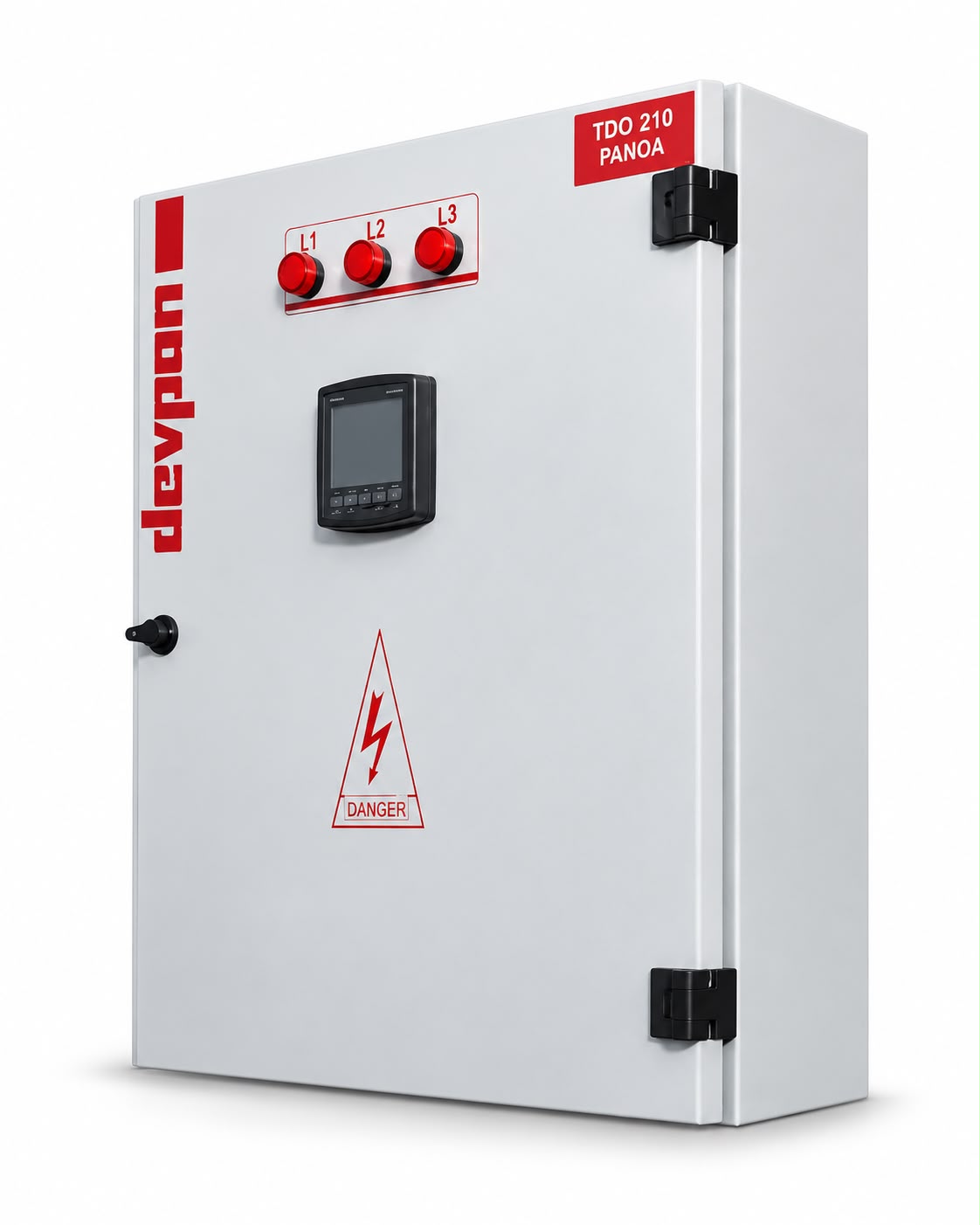
The DevBox sub-distribution board (SDB) is a low voltage switchboard that distributes energy from the main distribution board to final circuits by floor, block, section or machine. Rated 100 – 1600 A, it is built in wall-mounted, flush-mounted or floor-standing enclosures and equipped with molded case circuit breakers, MCBs, residual current devices (RCD) and surge protective devices (SPD).
What Is a Sub-Distribution Board and What Does It Do?

The main distribution board feeds the entire facility, but running every final circuit directly from the main switchboard is neither economical nor practical. A sub-distribution board brings energy closer to the point of consumption, reducing cable cross-sections and voltage drop and limiting the area affected in the event of a fault.
In DevBox boards, circuits are grouped by function: lighting, sockets, mechanical services and dedicated equipment supplies are placed in separate blocks. Each circuit has its own protective device and is identified by an engraved label; thanks to the single-line diagram kept inside the door, the board remains easy to understand years later.
Protection is built in three layers: miniature circuit breakers against overcurrent and short circuits, residual current devices for protection against electric shock, and surge protective devices against overvoltages caused by lightning and switching. How well these three layers are coordinated determines the board’s real protection performance.
Technical Specifications
DevBox sub-distribution boards are sized according to the installation location and the number of circuits. The table below summarizes standard and optional equipment.
| Property | Value / Option |
|---|---|
| Applicable standard | IEC 61439-1, IEC 61439-2; IEC 61439-3 for distribution boards operated by ordinary persons (DBO) |
| Rated current | 100 – 1600 A |
| Main protection | Molded case circuit breaker (MCCB) or switch-disconnector; motor operator optional |
| Outgoing circuit protection | Miniature circuit breakers (MCB), MCCBs, residual current circuit breakers with overcurrent protection (RCBO) |
| Residual current protection | 30 mA (socket and final circuits), 100 / 300 mA (main and lighting circuits); Type AC, A or B |
| Surge protection | Type 1+2 or Type 2 surge protective device (SPD) with backup fuse |
| Mounting | Surface-mounted, flush-mounted or floor-standing enclosure |
| Enclosure material | Cold-rolled (DKP) sheet steel; polyester or stainless steel enclosure option for outdoor use |
| Door type | Solid, windowed or full-glass; lockable |
| IP rating | IP41 / IP54 / IP65 |
| Measurement | Digital multimeter or energy analyzer (optional) |
| Terminals and neutral/earth bars | Separate neutral and earth busbars, numbered terminal groups |
| Labeling | Engraved label for each circuit, single-line diagram inside the door and circuit list |
| Spare space | 20% free module space for future expansion (on request) |
The values given are typical application ranges; final ratings are determined after the single-line diagram, short-circuit and selectivity calculations.
Key Decisions for the Right Sub-Distribution Board
Mounting type and enclosure material
In enclosed, clean spaces, a surface-mounted or flush-mounted sheet steel enclosure is sufficient. In wet areas, car parks, outdoors and chemically aggressive environments, a polyester or stainless steel enclosure with a higher IP rating is preferred.
Residual current device selection
30 mA sensitivity is essential for protection against electric shock on socket and final circuits; 300 mA is used for fire protection on main supply and lighting groups. For circuits with drives, UPS units and LED drivers, a Type A or B device is selected because of the DC component.
Surge protection coordination
If the building has an external lightning protection system, a Type 1+2 surge protective device is installed in the board; otherwise a Type 2 device is used. To protect the SPD and maintain selectivity, a backup fuse of suitable characteristic is installed upstream and the connecting conductors are kept as short as possible.
Labeling and documentation
A sub-distribution board proves its worth not on the day it is commissioned but when a fault occurs five years later. That is why an engraved label for each circuit, a single-line diagram inside the door and a circuit list are prepared as standard.
Where Is DevBox Used?
Sub-distribution boards are found wherever energy is consumed. The IP rating, enclosure material and circuit arrangement vary depending on where they are used.
- Floor distribution boards in residential and office projects
- Shopping mall, store and common area boards
- Hospital ward and operating theater boards
- School, dormitory and campus building boards
- Workshop and machine supply boards
- Car park, plant room and rooftop boards
- Hotel floor and kitchen boards
- Construction site and temporary installation boards
Relevant Technical Information
Frequently Asked Questions
What residual current rating should a sub-distribution board have?
30 mA sensitivity is essential for personal safety on sockets and final circuits. For main supply and lighting groups, 300 mA is generally preferred for fire protection. For selectivity, the upstream device is planned with a different sensitivity and time delay from the downstream devices.
Should a wall-mounted or floor-standing board be chosen?
Up to about 250 A and with a limited number of circuits, a wall-mounted enclosure saves space and is more economical. As the current rises, cable cross-sections get larger and the number of circuits grows, a floor-standing enclosure becomes necessary because of cable bending radii and terminal space.
What IP rating is required for a board installed outdoors?
Outdoors, at least IP54 is required; IP65 is preferred in locations exposed to direct rain and pressure washing. UV-resistant paint or a polyester enclosure against sunlight, ventilation against condensation and, if necessary, a heater with thermostat are also planned.
How is selectivity achieved between the sub-distribution board and the main board?
Selectivity means that a fault at a lower level trips only its own protective device. To achieve this, the tripping characteristics, current settings and time delays of the protective devices in the main and sub-distribution boards are coordinated. Adjustable time delays on breakers with electronic trip units make it much easier to achieve cascade selectivity.
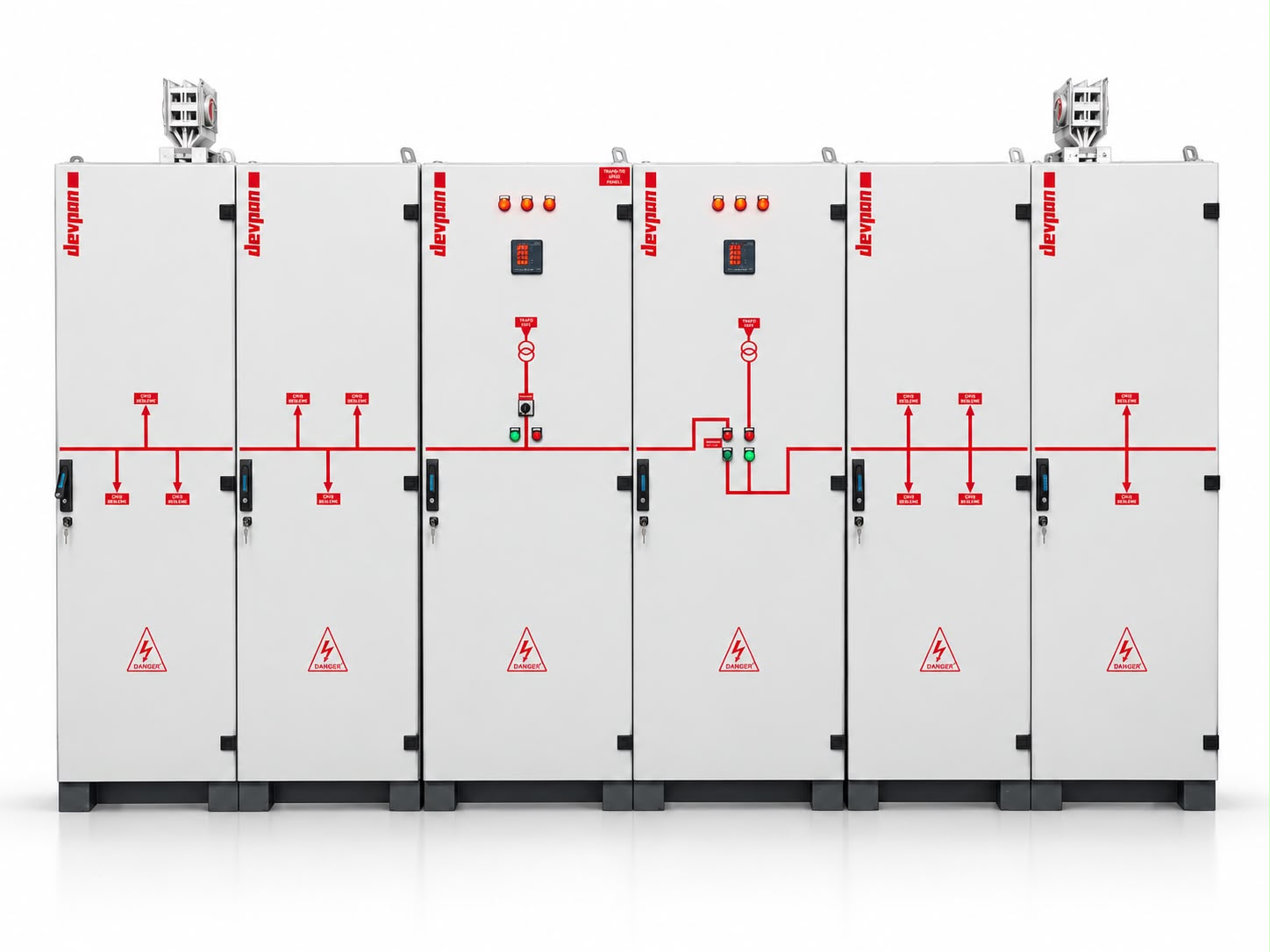
Other Low Voltage Switchboards


Share your circuit list and let’s plan your sub-distribution board
Whether you have a floor plan, a circuit list or a site layout, we can determine the board size, protective devices and mounting type together. For the main distribution side, see the DevPanel main distribution board.
Request a quote