
The ENKA Palmiye Project is a mixed-use development bringing several functions together in one scheme. Devpan supplied the main distribution, sub-distribution, power factor correction and lighting panels.

Electrical Profile of the Project
- Location
- Building typeMixed use
- Installed power≈ 6,400 kVA
- Transformer configuration4 × 1,600 kVA
- Main busbar rated current2 × 3,200 A
- Short-time withstand current (Icw)65 kA / 1 s
- Devpan scopeLow voltage switchboards, engineering and site coordination
- Verification standardIEC 61439-1, IEC 61439-2
About the Project
In mixed-use developments, residential, office, retail and shared facilities share one energy infrastructure, yet each has its own load profile, operating hours and continuity expectations. Retail areas draw heavy cooling loads throughout the day, homes peak in the evening, and common-area lifts, pumps and security systems must run without interruption. Separate metering and billing for different user groups also means the distribution architecture has to be divided into sections from the outset.
For a project of this scale the typical architecture uses transformers of about 4 × 1,600 kVA feeding two split main distribution blocks, each main busbar rated around 3,200 A. Form 4a – Form 4b separation ensures that maintenance in one use area does not affect the others. Sub-distribution boards feed each function through dedicated metering points, generators of approximately 2 × 1,250 kVA carry common and life-safety loads, and compensation and lighting panels complete the system.
Devpan Scope and Switchboard Architecture
Devpan’s scope runs from the transformer outgoers to the sub-distribution of each use area and the landscape lighting.
- Main distribution boards (DevPanel): 2 × 3,200 A busbars with couplers, 65 kA / 1 s, Form 4a – Form 4b, generator transfer.
- Sub-distribution boards (DevBox): Separately metered distribution for residential, office, retail and common areas.
- Power factor correction panels (DevComp): Detuned compensation for each transformer group.
- Lighting panels (DevPower): Common area, car park, landscape and emergency lighting.
Technical Configuration
| Installed power | ≈ 6,400 kVA |
|---|---|
| Transformer configuration | 4 × 1,600 kVA |
| Medium voltage level | 10 – 34.5 kV |
| Low voltage / frequency | 400 / 230 V, 50 Hz |
| Main busbar rated current | 2 × 3,200 A |
| Short-time withstand current (Icw) | 65 kA / 1 s |
| Form of internal separation | Form 4a – Form 4b |
| Degree of protection (IP) | IP31 – IP41 |
| Generator back-up | 2 × 1,250 kVA |
| Verification standard | IEC 61439-1, IEC 61439-2 |
Devpan Products Used in This Project
Project-Specific Engineering Topics
Separation by use
Each use group is fed from its own outgoers, so metering, maintenance and fault isolation can be handled function by function.
Load diversity
Because retail and residential peaks occur at different times, a diversity factor allows transformer capacity to be sized economically.
Common-area continuity
Lifts, booster pumps, fire and security systems are supplied from a generator-backed priority busbar.
Landscape and exterior lighting
Exterior lighting is fed from dedicated boards controlled by timers and daylight sensors to reduce energy use.
Frequently Asked Questions
What is the installed power for the ENKA Palmiye Project?
For a mixed-use development of this scale the installed power is approximately 6,400 kVA, with a typical transformer configuration of 4 × 1,600 kVA. The main busbar is typically rated 2 × 3,200 A; the MV connection lies in the 10 – 34.5 kV range depending on the network, and generator capacity is around 2 × 1,250 kVA.
How is metering organised in mixed-use projects?
Energy analysers at the incomers of each use group’s sub-distribution boards send consumption data to the building management system for reporting per user group.
What is the difference between Form 4a and Form 4b?
Both separate the functional units; in Form 4b the terminals of each outgoer also sit in their own compartment, so cables can be connected while neighbouring circuits stay live.
Similar Reference Projects
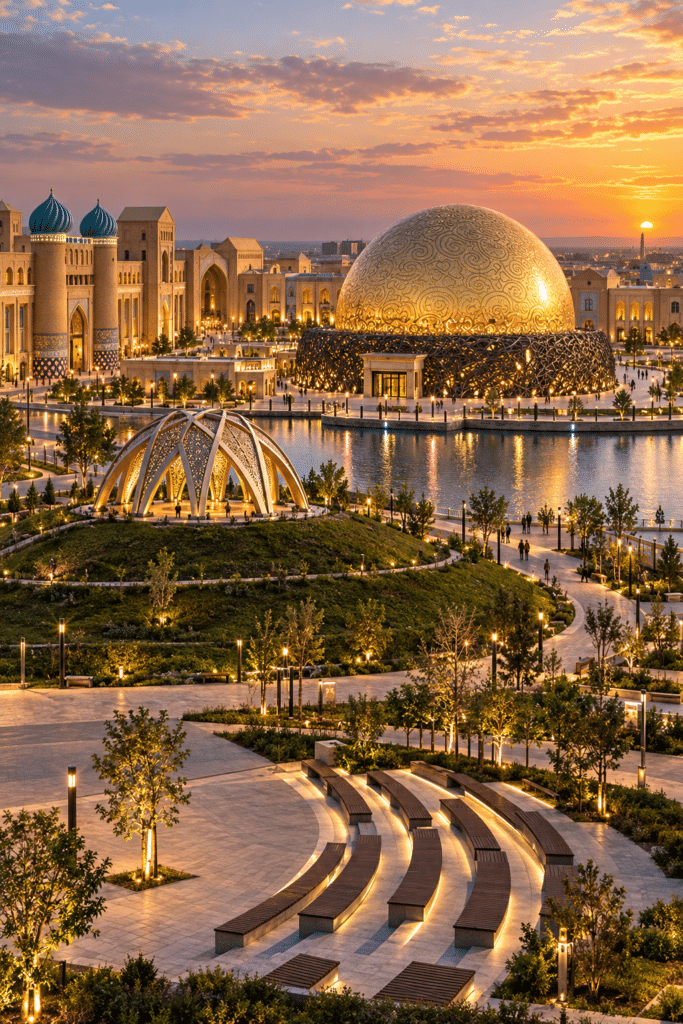 Turkistan ProjectMixed use · Turkistan, Kazakhstan
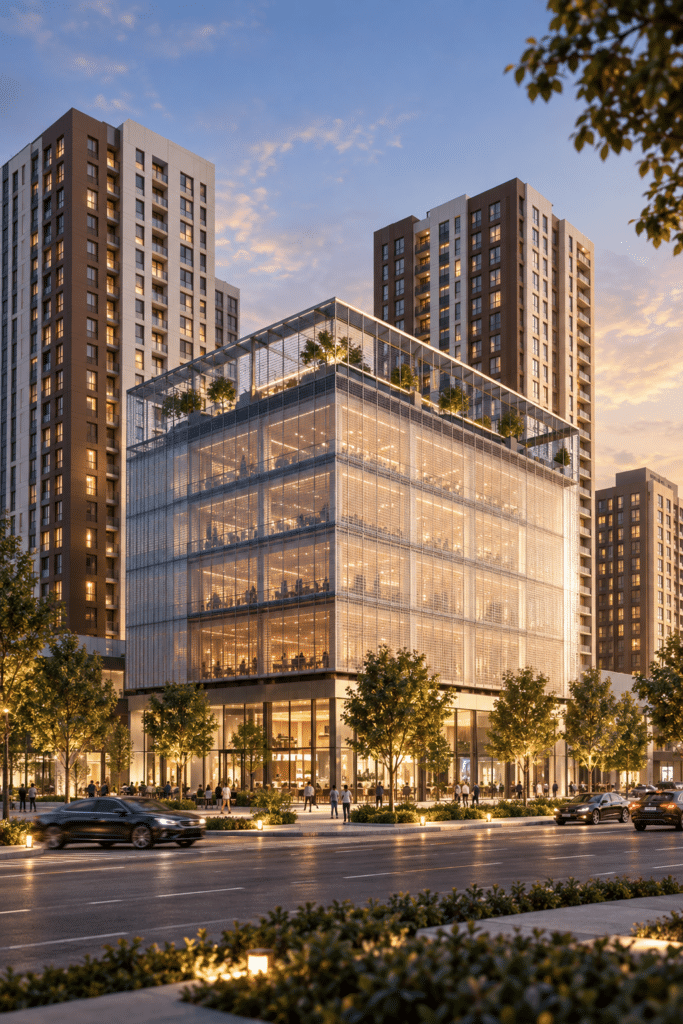 SKP Daho ProjectMixed use · Uzbekistan
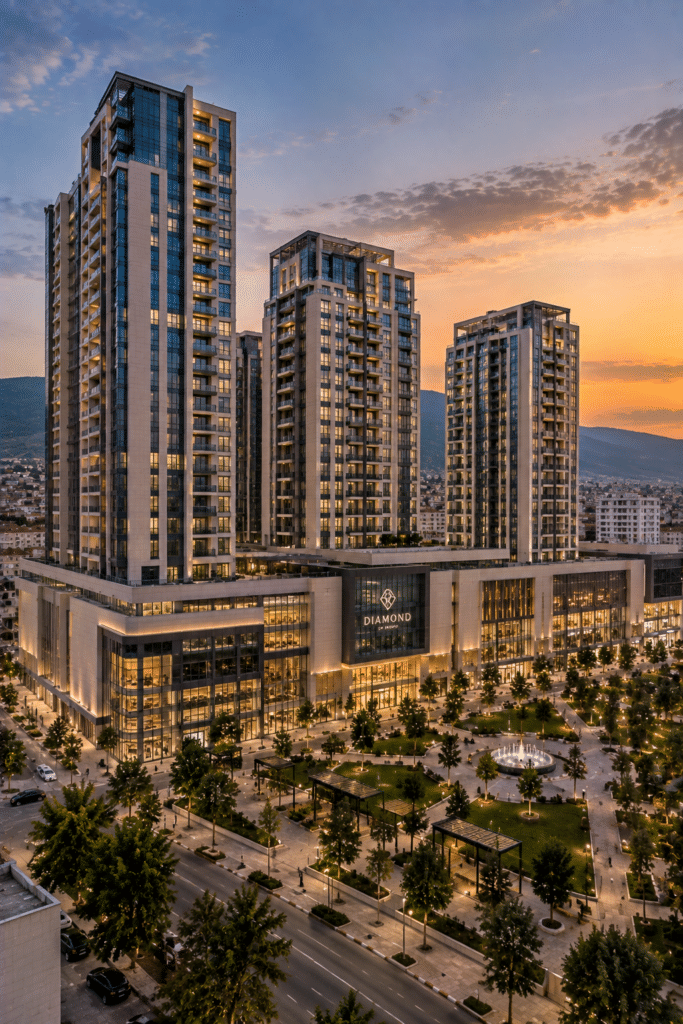 Skopje Multi-Purpose Development ProjectMixed use · Skopje, North Macedonia
Do you have a project of a similar scale?
Send us your single-line diagram, your transformer rating or simply your load list. Our engineering team runs the short-circuit and discrimination study and defines the form of separation and busbar cross-section with you.
Request a quotation