
The Arkadag 76-Block Housing Project is a large residential development in the city of Arkadag, Turkmenistan. Devpan supplied the main distribution, block and floor boards, power factor correction and common-area lighting panels.
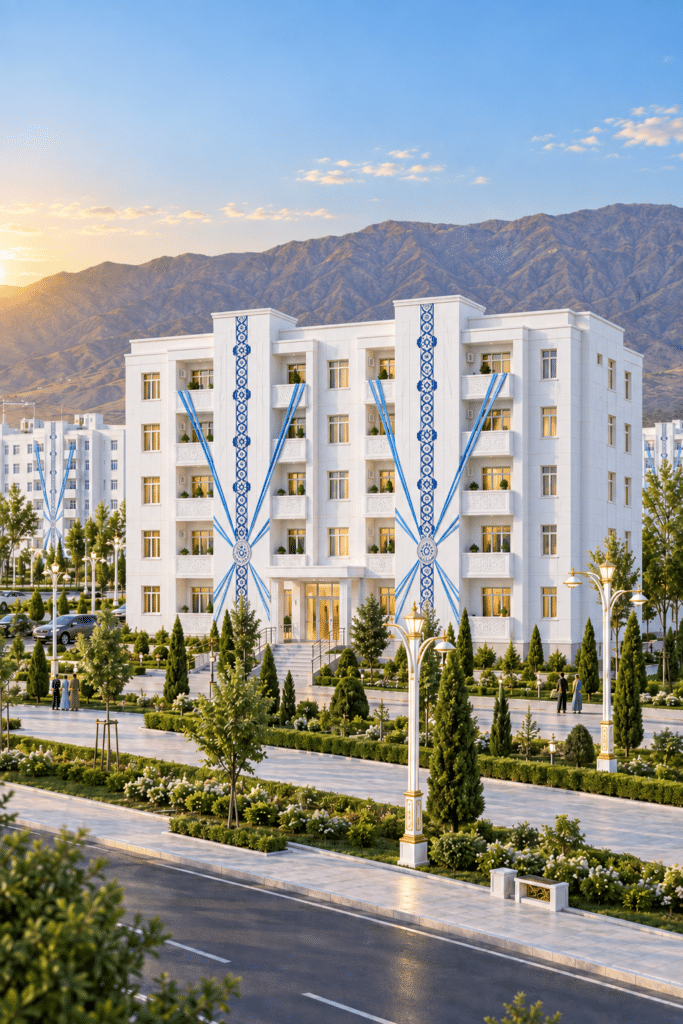
Electrical Profile of the Project
- LocationArkadag, Turkmenistan
- Building typeResidential complex
- Installed power≈ 3,200 kVA
- Transformer configuration2 × 1,600 kVA
- Main busbar rated current2 × 2,500 A
- Short-time withstand current (Icw)65 kA / 1 s
- Devpan scopeLow voltage switchboards, engineering and site coordination
- Verification standardIEC 61439-1, IEC 61439-2
About the Project
In a development of 76 residential blocks, the real challenge is not a single large load but hundreds of small ones spread over a wide site. Long feeders increase voltage drop, and single-phase apartment loads easily unbalance the phases. Turkmenistan’s hot, dry continental climate adds a sharp evening peak in summer when air conditioners start together, while dusty outdoor conditions put extra demands on enclosures and ventilation. Lifts, booster pumps and fire pumps must also stay available when the utility supply is lost.
For a residential scheme of this scale, the typical answer is roughly 2 × 1,600 kVA of transformer capacity fed from the 10 kV network, with a two-section main board and a bus coupler. DevPanel main boards with 2 × 2,500 A busbars and 65 kA / 1 s withstand distribute radial feeders to the blocks; if one transformer is out of service, priority loads can be carried through the coupler. DevBox boards handle floor and apartment distribution inside each block, DevComp panels correct the reactive load, and a generator of about 1,000 kVA backs up common and life-safety services on a dedicated busbar.
Devpan Scope and Switchboard Architecture
Devpan’s scope runs from the main LV distribution at the transformers down to block and floor boards, power factor correction and common-area lighting.
- Main distribution boards (DevPanel): 2 × 2,500 A busbars, 65 kA / 1 s, Form 3b – Form 4a segregation, bus coupler and generator transfer section.
- Block and floor boards (DevBox): IP31 – IP41 sub-distribution boards collecting incoming, floor and apartment circuits in every block.
- Power factor correction (DevComp): Stepped, detuned capacitor banks compensating air-conditioning and lift motor loads.
- Lighting and power panels (DevPower): Stairwell, car park, landscape and perimeter lighting with timer and photocell control.
- Standby supply (DevPanel): A priority busbar transferring lifts, booster and fire pumps to the approx. 1,000 kVA generator.
Technical Configuration
| Installed power | ≈ 3,200 kVA |
|---|---|
| Transformer configuration | 2 × 1,600 kVA |
| Medium voltage level | 10 kV |
| Low voltage / frequency | 400 / 230 V, 50 Hz |
| Main busbar rated current | 2 × 2,500 A |
| Short-time withstand current (Icw) | 65 kA / 1 s |
| Form of internal separation | Form 3b – Form 4a |
| Degree of protection (IP) | IP31 – IP41 |
| Generator back-up | 1 × 1,000 kVA |
| Verification standard | IEC 61439-1, IEC 61439-2 |
Devpan Products Used in This Project
Project-Specific Engineering Topics
Phase balancing
Apartment circuits are rotated across the three phases to limit neutral current and transformer unbalance.
Voltage drop on long feeders
Feeder cables to distant blocks are sized for voltage drop, and distribution points are placed close to the load centres.
Summer peak and compensation
Compensation steps are tuned to follow the evening air-conditioning peak, with detuning reactors to cope with harmonics.
Continuity of shared services
Lifts, booster and fire pumps sit on a separate priority busbar, so the generator only picks up these loads during an outage.
Frequently Asked Questions
What is the installed power of the Arkadag 76-Block Housing Project?
For a residential development of this scale, the installed power is approximately 3,200 kVA with a typical transformer configuration of 2 × 1,600 kVA. The main busbar is typically rated 2 × 2,500 A with 65 kA / 1 s withstand, and the medium voltage level is 10 kV.
Why use two transformers and a bus coupler for a multi-block site?
Two transformers with a coupled busbar prevent the whole site from going dark during maintenance or a fault. With one transformer out, priority blocks and shared services can be fed from the other through the coupler.
How does the hot climate affect switchboard design?
High ambient temperatures reduce the current capacity of busbars and breakers. Busbar sections are therefore selected with temperature derating, and enclosure ventilation uses filters suited to dusty conditions.
Similar Reference Projects
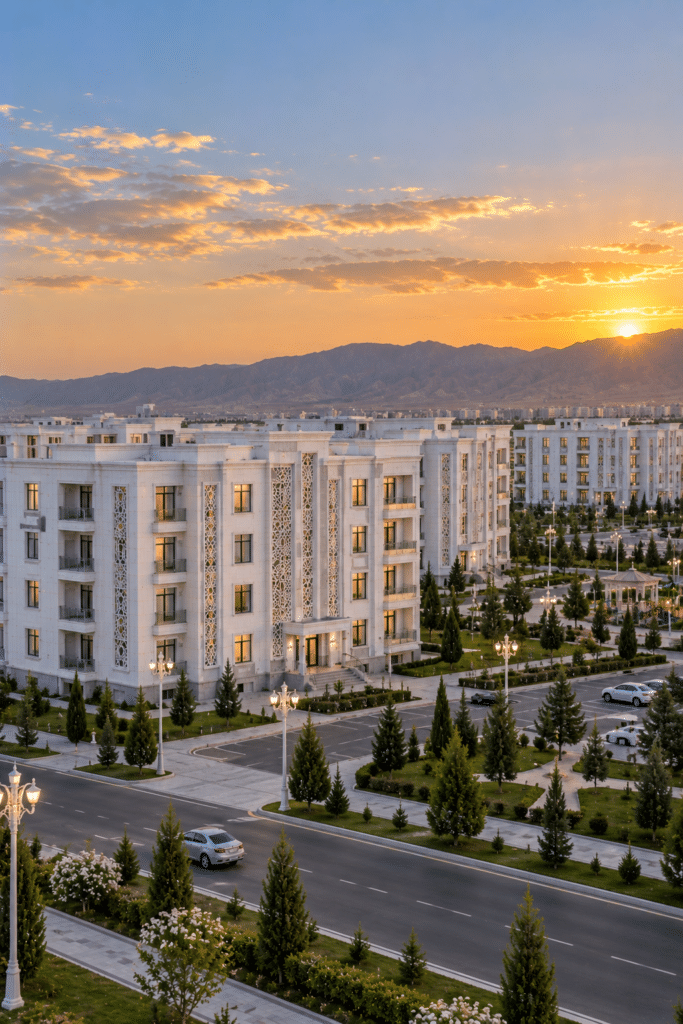 Ashgabat Taslama Housing ProjectResidential complex · Ashgabat, Turkmenistan
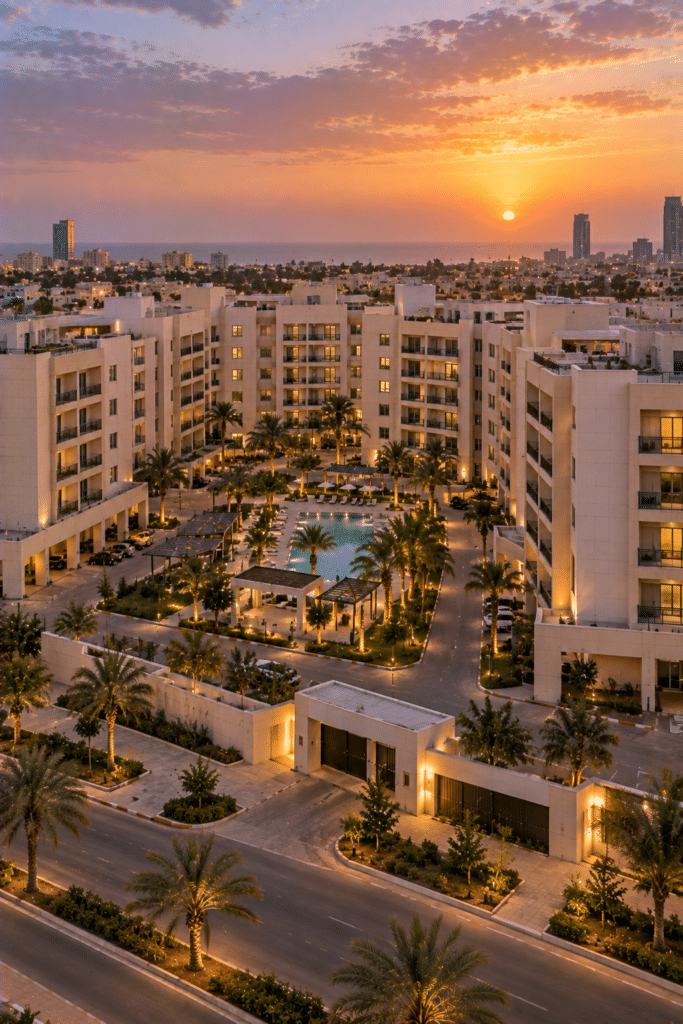 Al Hamra Residential ProjectResidential complex ·
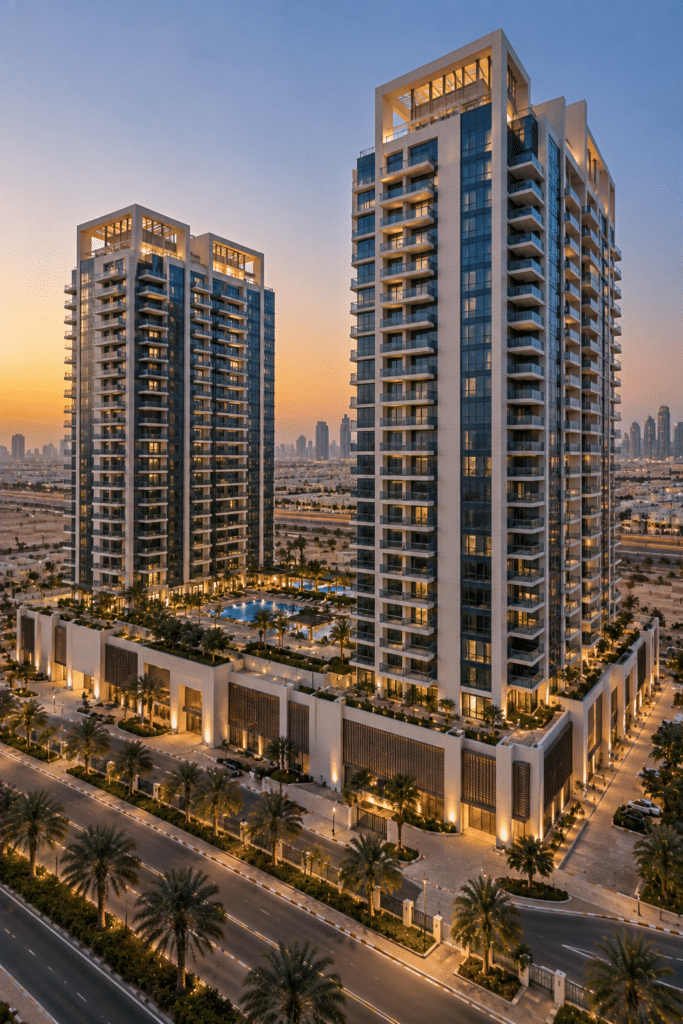 Dubai Land Residential ComplexResidential complex · Dubai, United Arab Emirates
Do you have a project of a similar scale?
Send us your single-line diagram, your transformer rating or simply your load list. Our engineering team runs the short-circuit and discrimination study and defines the form of separation and busbar cross-section with you.
Request a quotation