
Nekrasovka Residential Complex in Moscow is a multi-block housing development. Devpan supplied the main distribution, block distribution, power factor correction and common-area lighting panels.

Electrical Profile of the Project
- LocationMoscow, Russia
- Building typeResidential complex
- Installed power≈ 6,400 kVA
- Transformer configuration4 × 1,600 kVA
- Main busbar rated current2 × 3,200 A
- Short-time withstand current (Icw)65 kA / 1 s
- Devpan scopeLow voltage switchboards, engineering and site coordination
- Verification standardIEC 61439-1, IEC 61439-2
About the Project
Large residential complexes show a pronounced evening peak, when cooking appliances, lighting and, in winter, supplementary heaters all switch on together. On top of this, common services such as lifts, booster pumps, smoke extraction fans and car park ventilation must be supplied reliably and independently of the apartments. Moscow’s long winters extend the duration of these loads. For a complex of this scale the installed power is typically around 6,400 kVA. The distribution system has to apply realistic diversity factors while keeping fire-safety loads fully segregated from everyday consumers.
In the typical solution, four 1,600 kVA transformers fed from the 10 kV network connect to a 2 × 3,200 A main board split by a bus coupler, with each block supplied radially. Within each block, apartment meter groups and common-area feeders are housed in separate sections. Life-safety loads such as fire pumps, smoke extraction and firefighting lifts are fed from dedicated busbars backed by a 2 × 1,250 kVA generator. Automatic power factor correction balances the reactive demand of motors and LED drivers and avoids utility penalties.
Devpan Scope and Switchboard Architecture
Devpan’s scope covers the complex’s low-voltage infrastructure from the transformer outputs to block and floor distribution.
- Main distribution boards (DevPanel): 2 × 3,200 A, 65 kA / 1 s, two sections with bus coupler and block feeders.
- Block and floor boards (DevBox): Sub-distribution for apartment meter groups and common service feeders.
- Power factor correction (DevComp): Automatic stepped reactive power compensation.
- Lighting and power panels (DevPower): Stairwell, corridor, car park and external lighting.
Technical Configuration
| Installed power | ≈ 6,400 kVA |
|---|---|
| Transformer configuration | 4 × 1,600 kVA |
| Medium voltage level | 10 kV |
| Low voltage / frequency | 400 / 230 V, 50 Hz |
| Main busbar rated current | 2 × 3,200 A |
| Short-time withstand current (Icw) | 65 kA / 1 s |
| Form of internal separation | Form 4a – Form 4b |
| Degree of protection (IP) | IP31 – IP41 |
| Generator back-up | 2 × 1,250 kVA |
| Verification standard | IEC 61439-1, IEC 61439-2 |
Devpan Products Used in This Project
Project-Specific Engineering Topics
Diversity and evening peak
Apartment loads do not peak together, so diversity factors are applied and busbars and breakers are sized to a realistic peak.
Segregated fire-safety loads
Fire pumps, smoke extraction fans and firefighting lifts are supplied by independent, generator-backed circuits.
Metering arrangement
Apartment and common-area meters sit in separate compartments of the block boards for easy reading and maintenance.
Radial supply per block
Each block has its own feeder, so maintenance or a fault in one block leaves the others energised.
Frequently Asked Questions
What is the installed power for a complex like Nekrasovka?
For a residential complex of this scale the installed power is approximately 6,400 kVA, with a typical transformer configuration of 4 × 1,600 kVA. The main busbar is typically 2 × 3,200 A with a 65 kA / 1 s rating, supplied at 10 kV medium voltage.
Which loads does the generator supply in a residential project?
A typical 2 × 1,250 kVA generator capacity supplies fire pumps, smoke extraction, firefighting lifts, emergency lighting and critical common services rather than the apartments.
Why is power factor correction needed in residential complexes?
Lift, pump and fan motors and LED drivers draw reactive power; automatic compensation keeps the power factor on target, reducing losses and reactive energy charges.
Similar Reference Projects
 Verkhoyanskaya Residential ComplexResidential complex · Moscow, Russia
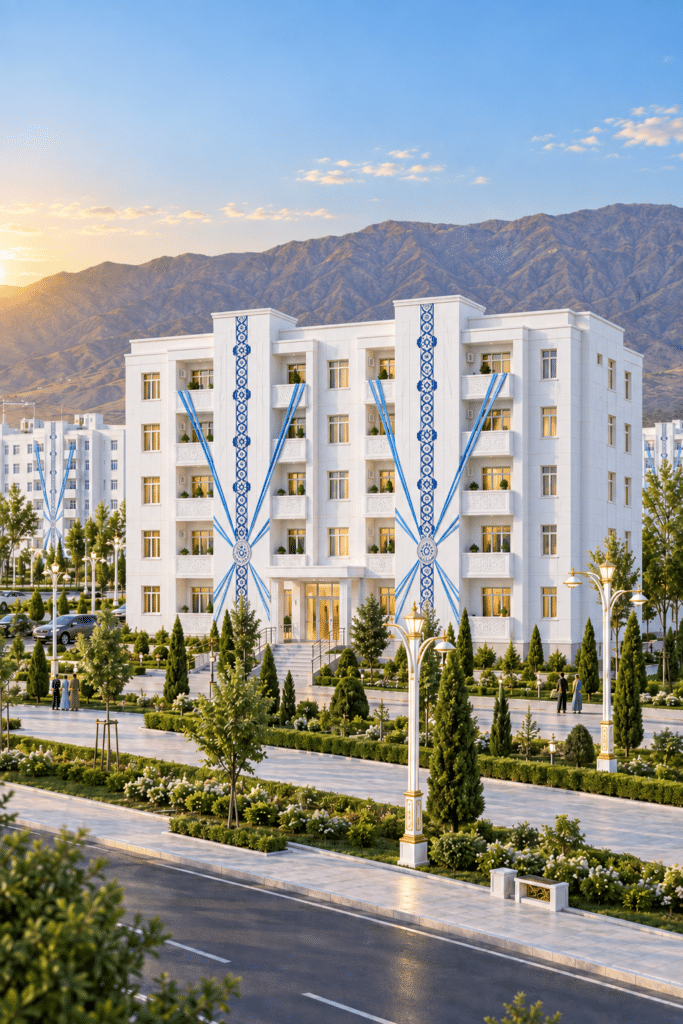 Arkadag 76-Block Housing ProjectResidential complex · Arkadag, Turkmenistan
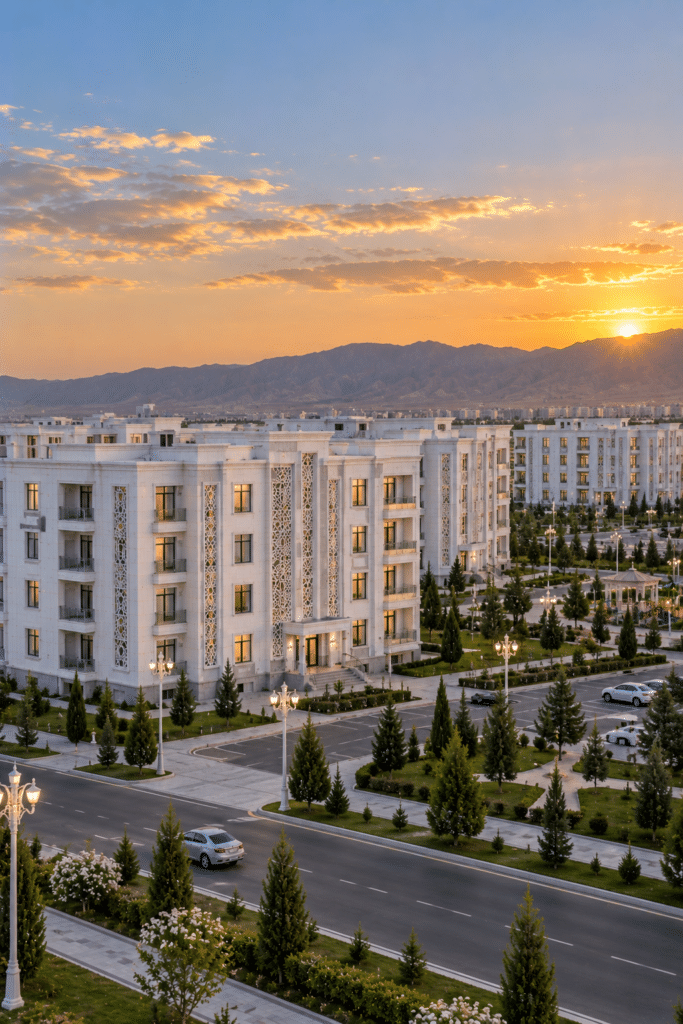 Ashgabat Taslama Housing ProjectResidential complex · Ashgabat, Turkmenistan
Do you have a project of a similar scale?
Send us your single-line diagram, your transformer rating or simply your load list. Our engineering team runs the short-circuit and discrimination study and defines the form of separation and busbar cross-section with you.
Request a quotation